The best jobs for veterans are the ones that build on a military specialty, because employers pay most for experience they can match to the job in front of them. A diesel mechanic, a supply sergeant, a network defender and a helicopter pilot each have civilian jobs waiting that ask for exactly what they did in uniform.
The match matters more than the industry. A job that uses your specialty starts you at a higher level, with a shorter search, than a job you have to learn from scratch.
The best job is the one your specialty already trained you for
Start with your MOS, rating or AFSC. The Department of Labor’s free crosswalks, My Next Move for Veterans and the military search on O*NET OnLine, turn a military code into civilian job titles. Use the civilian title in your job search and on your resume, since that is what an employer’s screening software looks for.
The table shows the most direct matches and the hubs where those jobs are listed.
| Military background | Civilian jobs | What they usually ask for |
|---|---|---|
| Vehicle, generator and equipment maintenance | Diesel mechanic, field service technician, maintenance technician | Years in the trade, often a state license or EPA 608 |
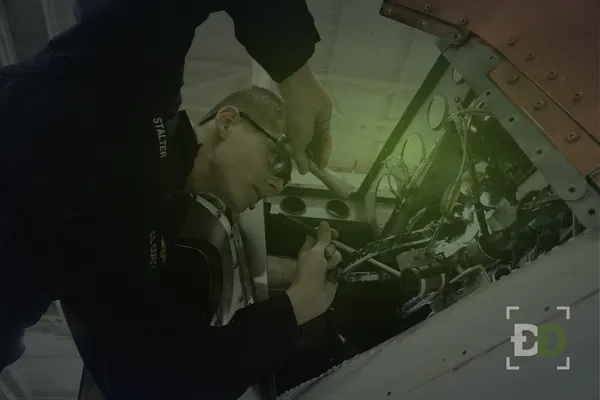
| Aircraft maintenance and aircrew | Aircraft mechanic, avionics technician, pilot | FAA A&P certificate or pilot certificate |
| Supply, transportation and motor pool | Warehouse supervisor, dispatcher, logistics coordinator, truck driver | Supervision experience, a CDL for driving |
| Cyber, signals and network operations | Security analyst, incident responder, network administrator | Hands-on experience, a certification such as Security+ |
| Intelligence | Intelligence or threat analyst, investigator | Analysis experience, often a clearance |
| Combat arms and operations | Operations manager, security manager, subject matter expert | Leadership experience, sometimes a clearance |
Maintenance and repair jobs take mechanics and technicians straight across
Military mechanics and technicians have some of the most portable skills in the services, because a diesel engine, a generator or an HVAC system works the same on base and off. Employers hiring technicians ask for years in the trade, and many name a license or a certification. HVAC work needs the EPA Section 608 certification to handle refrigerants, and electricians need a state license, which most states grant after an apprenticeship and an exam.
Field service jobs, where you travel to repair equipment at customer sites, suit people who ran maintenance on the move. Plant maintenance jobs suit people who kept a motor pool or a flight line running on a schedule.
Logistics jobs pay for running supply, transport and warehouses
Planning, moving and tracking supplies for a unit is supply chain work, and logistics jobs hire on supervision experience more than on degrees. Warehouse and distribution center supervisors, inventory control leads and dispatchers come straight from supply and transportation specialties.
Driving jobs need a commercial driver’s license. Service members and recent veterans with military truck experience can skip the CDL driving skills test under the Federal Motor Carrier Safety Administration’s Military Skills Test Waiver, which each state takes part in. FMCSA extended the window to apply to two years after the qualifying military driving job, and each state’s licensing agency handles the application.
Cybersecurity and intelligence jobs reward hands-on work and a clearance
Military cyber, signals and network defense experience counts as security experience, and cybersecurity jobs hire on what you can do more than on a degree. Security operations, incident response and network administration are the closest matches. A certification helps a screener read your level, and entry-level postings name CompTIA Security+ more than any other.
Former intelligence analysts fit analyst jobs at security firms, banks and companies that track threats. An active security clearance is worth listing by level and status, because cleared roles go unfilled for months while a new clearance is processed.
Aviation jobs carry over through FAA rules written for the military
Two federal rules turn military aviation experience into a civilian certificate. Military pilots can get an FAA commercial pilot certificate on the strength of their military flying under 14 CFR 61.73, with a knowledge test in place of the full training. Military mechanics can qualify for the A&P exams through documented experience under 14 CFR 65.77, which asks for 18 months of practical experience for one rating or 30 months for both.
FAA inspectors check the work you did, item by item. A specialty code alone doesn’t qualify you, so keep your training records and evaluations. The aviation jobs list airline, cargo and maintenance openings.
Remote expert work pays for knowledge when the hands-on job isn’t an option
Some veterans want work they can do from home, between jobs or next to one. AI companies pay people with military experience to check what their systems say about operations, intelligence, maintenance and logistics, and to write better answers. The remote jobs and the military subject matter expert jobs are mostly this kind of work, paid by the hour on contract. How to find remote jobs as a veteran covers how to apply.
Federal jobs add veterans’ preference on top
Federal agencies give eligible veterans 5 or 10 extra points, or a place at the top of a hiring category, and some special authorities let an agency hire a veteran without a competition. Preference applies only to federal jobs, posted on USAJOBS. How veterans preference points work explains who qualifies and how to claim it.
Close the gap before you apply
The job post you want may name a certification you don’t hold yet. Two programs pay for it.
SkillBridge lets service members spend up to their last 180 days of service training or interning with a civilian employer, while still drawing military pay and benefits. It needs command approval, and each branch sets its own rules on timing.
After you leave, the GI Bill reimburses approved licensing and certification tests up to $2,000 per test, including a retake if you fail. VA charges your entitlement only for the amount it pays back.